Asked "should we move to a queue?", a model usually gives a balanced-sounding paragraph that commits to nothing. Not because it cannot reason, but because the prompt gave it no method. Structured thinking prompts supply the method.
Four methods that cover most engineering decisions
| Method | Use when | Prompt core |
|---|---|---|
| Pre-mortem | Before a launch, migration or big refactor | "Assume this failed in 6 months. List the 5 most likely causes, each with a mitigation and an owner." |
| Tradeoff table | Choosing between 2-4 options | "Options as columns, criteria as rows, score 1-5 with a one-line reason; then recommend one and say what would change your mind." |
| Five whys | A recurring bug or incident | "Start from the symptom. Ask why five times, citing evidence at each step. Stop at a cause we can act on." |
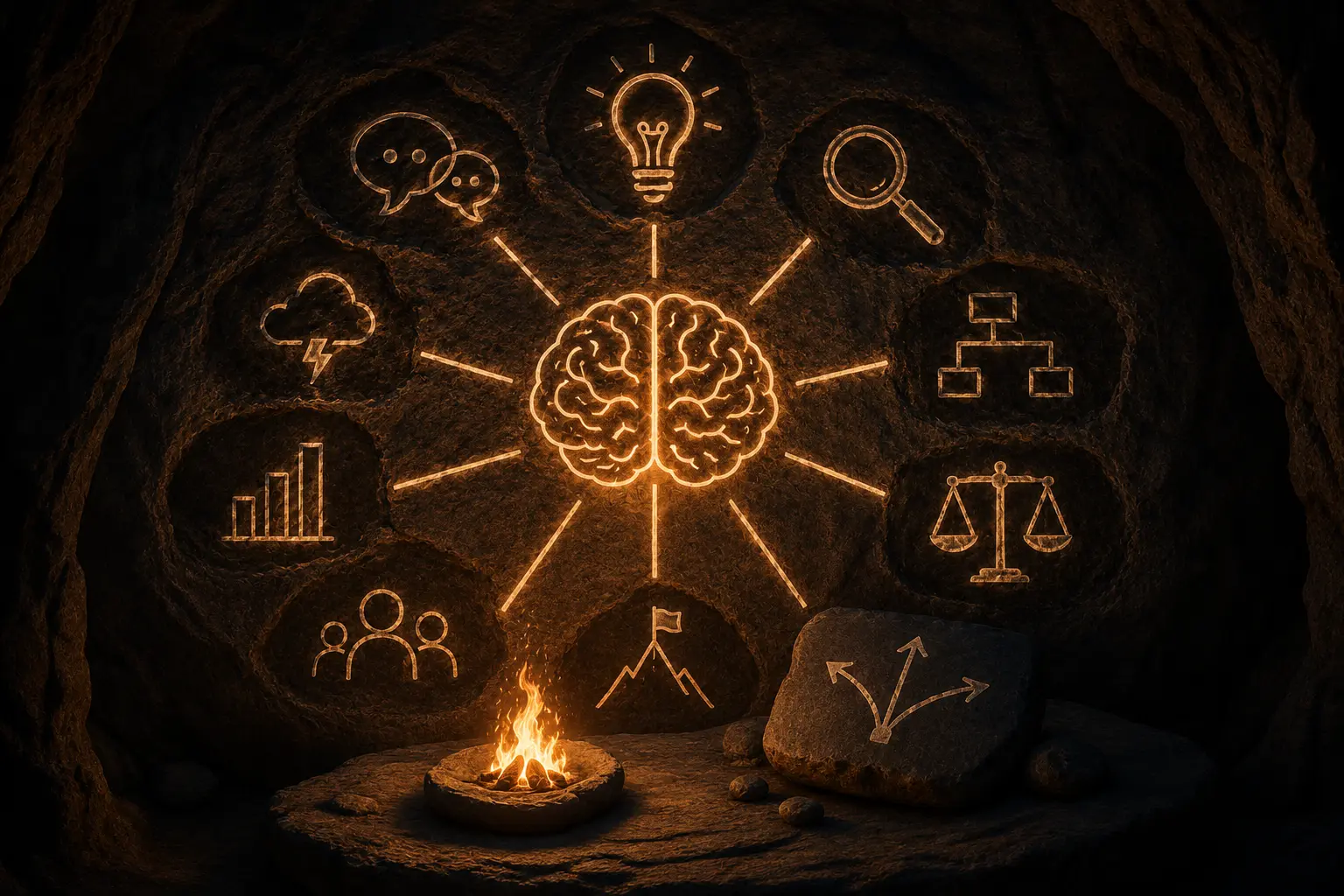
| Six thinking hats | A decision mixing facts, feelings and risks | "One section per hat: facts, gut feel, risks, benefits, new ideas, then a synthesis." |
Example: a pre-mortem prompt
We plan to move nightly cron jobs to a job queue (Celery + Redis) next sprint.

Run a pre-mortem:
1. Assume it is 6 months later and the migration failed.
2. List the 5 most likely causes, most likely first.
3. For each: early warning sign, mitigation, owner role.
4. Finish with the one change to the plan you would make today.

Use only facts in this message and the repo; mark guesses as [guess].
The last line keeps the model from inventing incidents. Marking guesses is useful in every method.
Ready-made methods as skills
Typing a method every time is error-prone. ai-agent-skills packages 17 of them as installable skills, grouped by job: Understand (five whys, analytical, systems, first principles, design), Assess (SWOT, tradeoff, prioritization, strategic, Fermi), Check (critical, pre-mortem, ethical), Ideas (creative, lateral), Angles (six thinking hats), plus a thinking-method-selector that picks one for you.
npx skills add ysskrishna/ai-agent-skills --skill pre-mortemOnce installed, "run a pre-mortem on this plan" triggers the same structure every time, including the habit of gathering facts before analysing.
Keep facts and opinions apart
The most valuable thing a method does is separate kinds of statements. In a six-hats pass, facts go under White, gut reactions under Red, risks under Black. When they are mixed, a confident opinion reads like a fact. Ask the model to tag claims:
Tag each bullet [fact], [estimate] or [opinion].Step by step
- Pick a real decision your team faces this month.
- Choose the method from the table.
- Write the prompt with: the decision in one sentence, the facts you have, the method steps, an output limit, and "mark guesses".
- Compare the result with an unstructured "what do you think?" prompt on the same decision.
Quick check
-
Which method fits "our deploys keep failing on Fridays"?Five whys: start from the symptom and dig to an actionable cause.
-
Which line stops the model inventing facts?"Use only facts given; mark guesses as [guess]" (or tag each claim).
-
What does the thinking-method-selector skill do?Picks a suitable method from the collection for your question.