
ysskrishna logoysskrishna
Express React Typescript SEO Starter logo

Express React Typescript SEO Starter

Per-route titles and meta tags in a working full-stack TypeScript app you can fork.

Video thumbnail 1
Gallery image 2
Gallery image 3
Built with
Starter Kits & Boilerplates
Marketing & SEO
Technical SEO
React
Express
TypeScript
Tailwind CSS
Node.js
Docker
JavaScript
Details
FreeMIT licenseCreated March 10, 2025Updated November 12, 2026
Share this product

Every route still shares one title, and search previews look unfinished.

You are shipping a multi-page React app behind Express. Marketing wants a real title and description on each URL. Social previews should match the page someone shared. You can keep patching index.html, or you can start from a small app that already wires page-level metadata, a backend, and the usual SEO files.

Express React Typescript SEO Starter is that starting point.

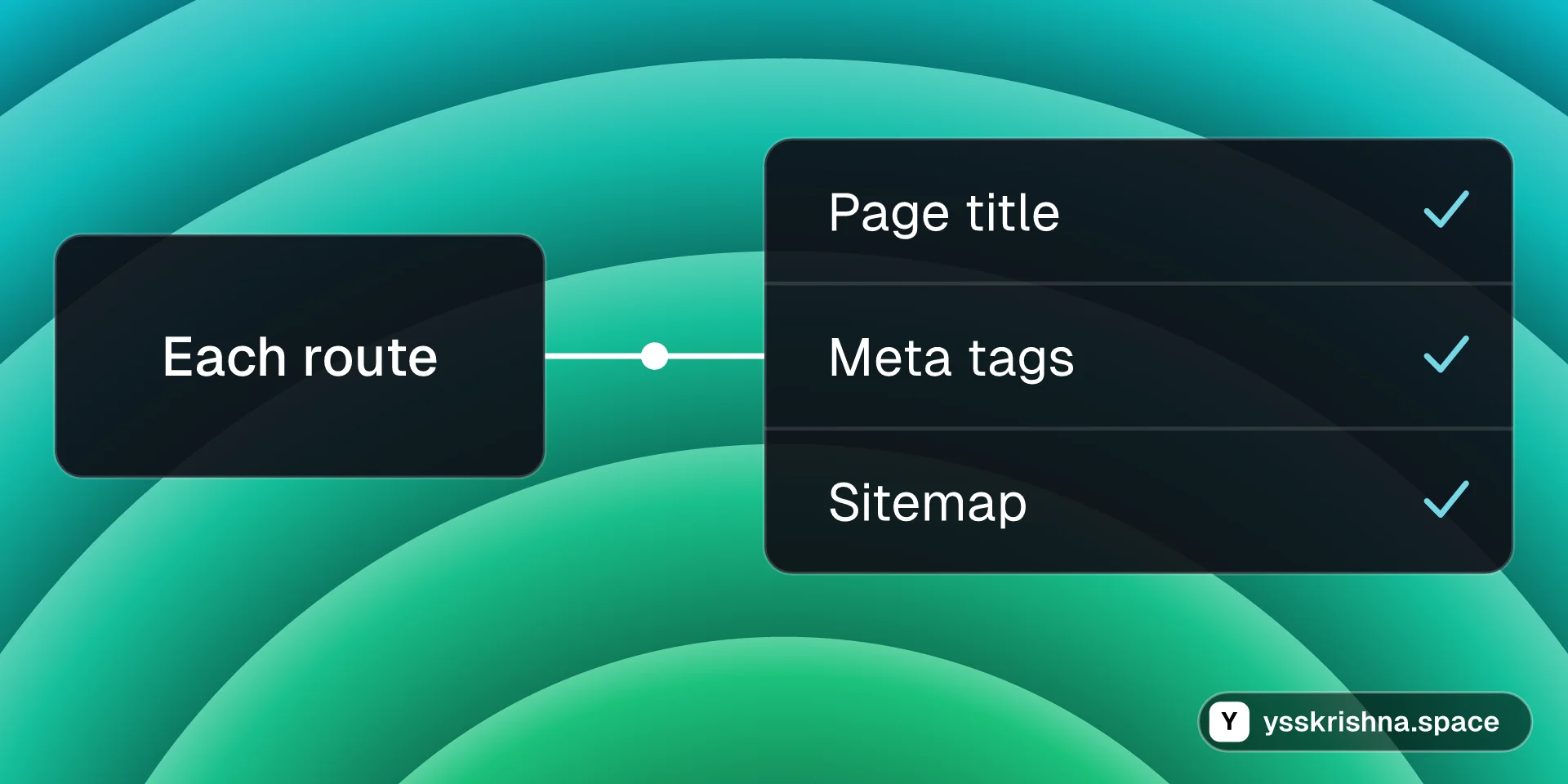
Same app. Different page. Different title and tags.

What you get

  • Per-page metadata without guessing. Individual pages set dynamic titles and meta tags the way this sample implements them, so each route can speak for itself.
  • A full stack in one clone. TypeScript runs on the Express server and the React client, with concurrent hot-reload development or a documented container workflow when you want a production-style run.
  • Sitemap and robots ready to extend. The project tree includes sitemap and robots assets plus a script to generate the sitemap, so you are not inventing SEO plumbing from zero.
  • A written SEO walkthrough. The repository ships an SEO guide alongside developer notes when you want the reasoning behind this setup.
  • Free to fork. MIT licensed on GitHub at no cost.

Your first morning after cloning

For example, you open the demo pages, change the title on one route, refresh, and see the browser tab and meta tags update for that page only. You skim the SEO guide, peek at the sitemap asset, and point staging at the container workflow before you add your own routes.

Check snippets before you ship

Paste a URL and preview how titles and social cards might look in the wild.

Ready to try it?

Keep exploring

Frequently asked questions

How do I set a page title and meta description per route in React?

This starter keeps page components responsible for their own titles and tags. Open the pages in the client folder, follow the pattern already there, and each route can publish its own metadata without editing a single global HTML file.

Is client-side metadata enough for SEO, or do I need a server-rendered framework?

This repo is a working reference for page-level metadata in a client-rendered React app, not a full HTML server render. It helps you learn the mechanics and social preview tags. Rankings still depend on content, performance, and links. If you need HTML generated on the server for every request, you will extend beyond what this sample documents.

What is inside the Express React TypeScript SEO starter?

You get a TypeScript Express backend, a Vite-powered React frontend, page-level SEO management, Tailwind for layout, lightweight JSON storage for demos, ESLint, environment variable support, and Docker Compose for a documented production-style run.

What is the quick way to run it locally?

The README points to Docker Compose to build and start the app in production mode at http://localhost:5000. Developer setup and source install live in the development guide in the same repository.

Will this guarantee search rankings?

No. A starter does not guarantee rankings. Tags help, but Core Web Vitals, backlinks, and the words on the page matter just as much. You still own analytics, content, and outcomes in production.

Is LowDB enough once traffic grows?

The README positions the JSON database for lightweight persistence in demos. Serious traffic usually means a real database and caching you add yourself. Auth, internationalization, and edge deploy beyond the documented stack are custom work.

Why not just scaffold Express and React myself?

You can. This repo saves the first week of wiring: typed API shapes, page-level metadata pattern, sitemap and robots assets, container workflow, and an SEO guide in one tree you can fork instead of reconcile.

Is it free?

Yes. The project is MIT licensed and listed as free on this site. Clone from GitHub and adapt it without a licence fee.

Continue exploring

BlogCover image for What Google Sees: A Deep Dive into JSON-LD Metadata Harvesting

What Google Sees: A Deep Dive into JSON-LD Metadata Harvesting

Python
JavaScript
+2
3 min read
ToolCover image for JSON-LD / Schema.org Extractor

JSON-LD / Schema.org Extractor

Extract JSON-LD from any public HTTPS page and review schema types in seconds.

Marketing & SEO
Technical SEO
ToolCover image for Sitemap URL Extractor

Sitemap URL Extractor

Sitemap to CSV extractor for XML sitemaps and nested sitemap indexes.

Marketing & SEO
Technical SEO
ToolCover image for Open Graph Preview Checker

Open Graph Preview Checker

Open Graph checker and link preview tool for X, Facebook, LinkedIn, Slack, Discord, and WhatsApp.

Marketing & SEO
Content & Writing
ToolCover image for Google SERP Snippet Preview

Google SERP Snippet Preview

Google SERP simulator to test title tags, meta descriptions, and mobile truncation before publishing.

Marketing & SEO
Content & Writing
ToolCover image for AI Crawl Checker

AI Crawl Checker

Test GPTBot, ClaudeBot, Googlebot, and other AI crawlers against robots.txt for any URL.

Marketing & SEO
Chat & AI
+1