Score outbound customer replies from .eml threads using a small, tunable ruleset
This service audits email quality for threads saved as .eml files. A rules engine applies checks the README lists (such as greeting, clarity, grammar, and professional tone) and returns an overall score, pass/fail per rule, and short justifications. It assumes the last message in the thread is the employee reply and focuses on the main response body (quoted or forwarded blocks are not the center of analysis).
When it is useful
You want repeatable, explainable checks on draft or archived replies, you are prototyping QA workflows for support teams, or you need a container-friendly way to batch-evaluate sample threads. It fits internal tooling and experiments, not an instant “compliance certification” product by itself.
What you can do
- Point the CLI at one or more
.emlfiles and choose which rules to enable. - Label employee mail with a domain hint so the parser knows who “you” are in the thread.
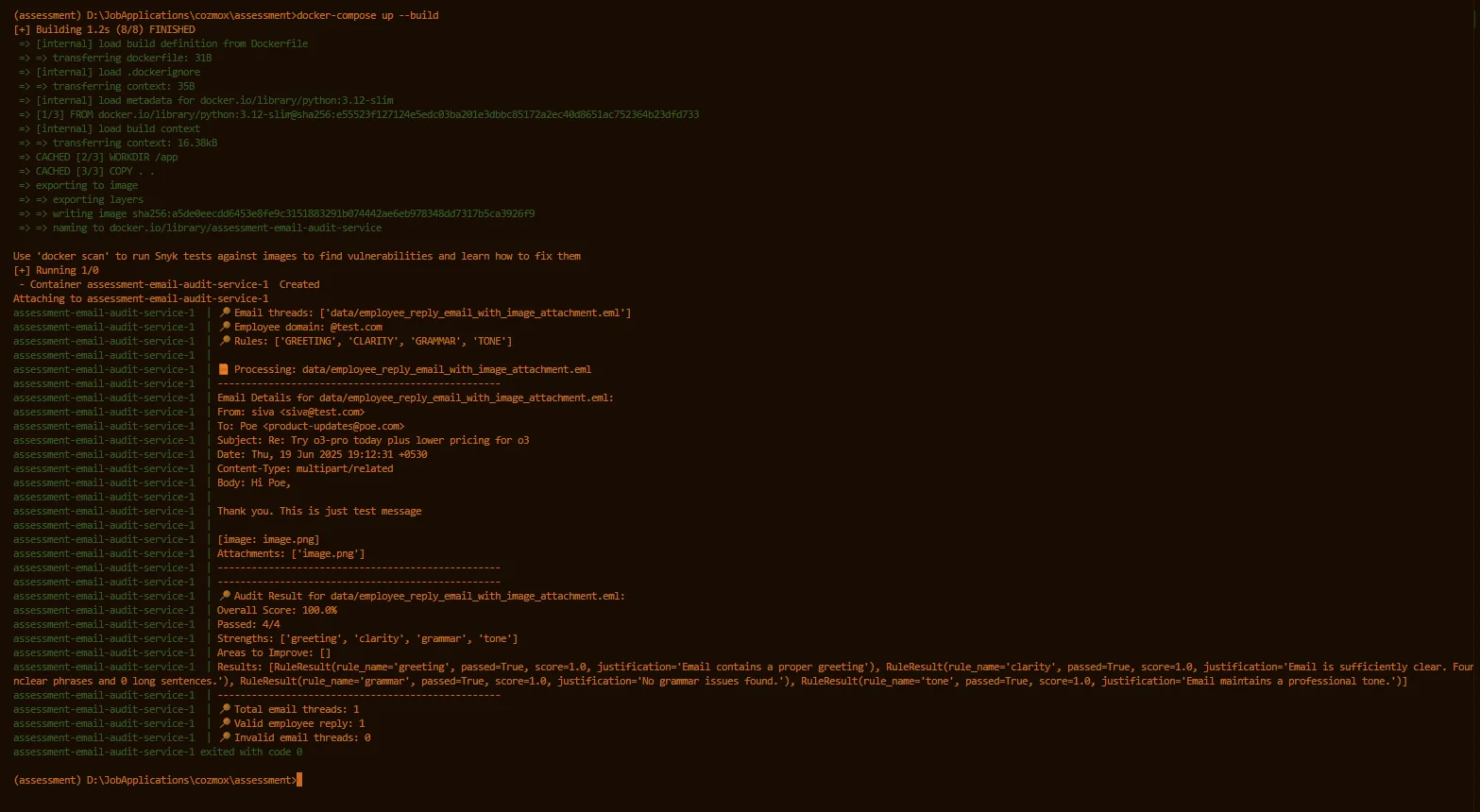
- Run via Docker Compose or locally as documented in the GitHub repository.
- Read strengths and improvement notes alongside numeric results in the console-style output shown in the project media.
Limits
- Rule coverage is finite: it checks what the engine implements, not every regulatory, contractual, or industry rule you may owe.
- No automatic legal compliance: outcomes are heuristic; escalate anything legally sensitive to human review and proper counsel.
- Thread assumptions matter: mis-ordered messages or unusual formats can skew results; validate on your real archives before trusting scores.